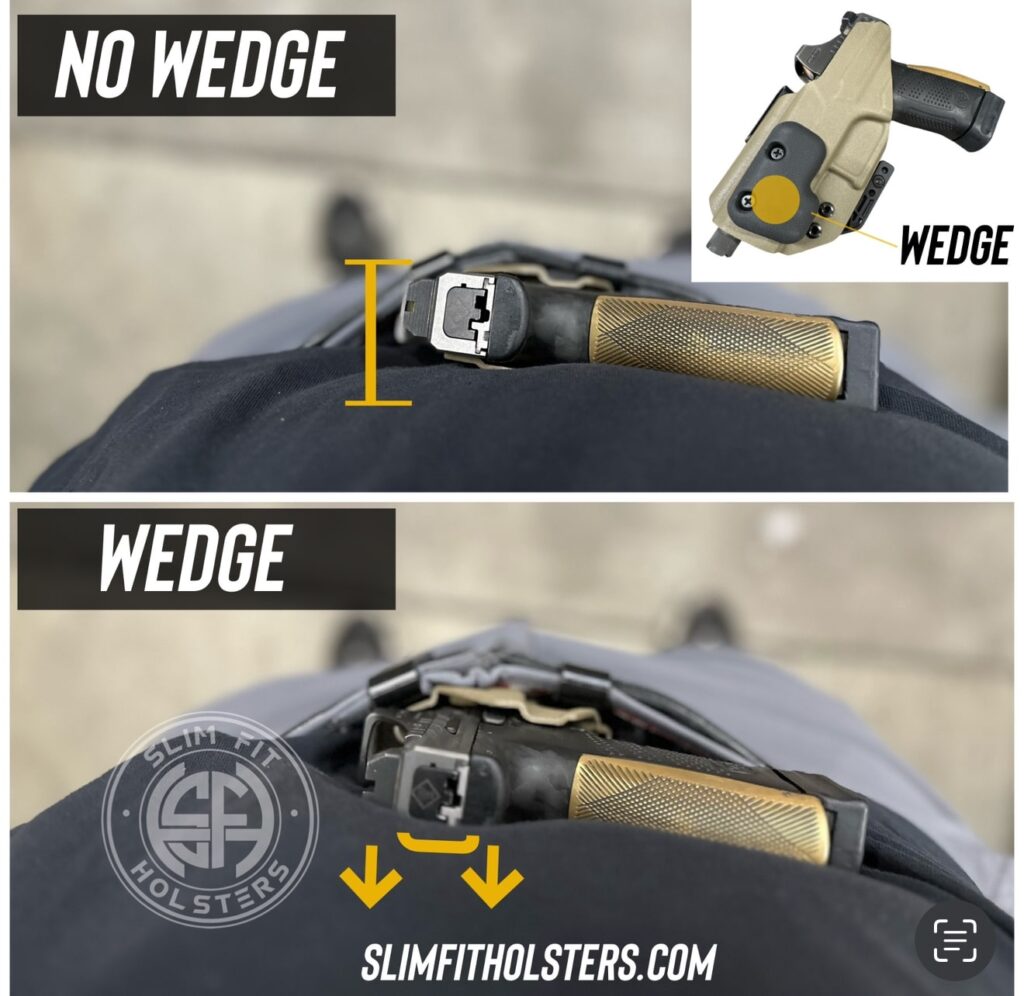
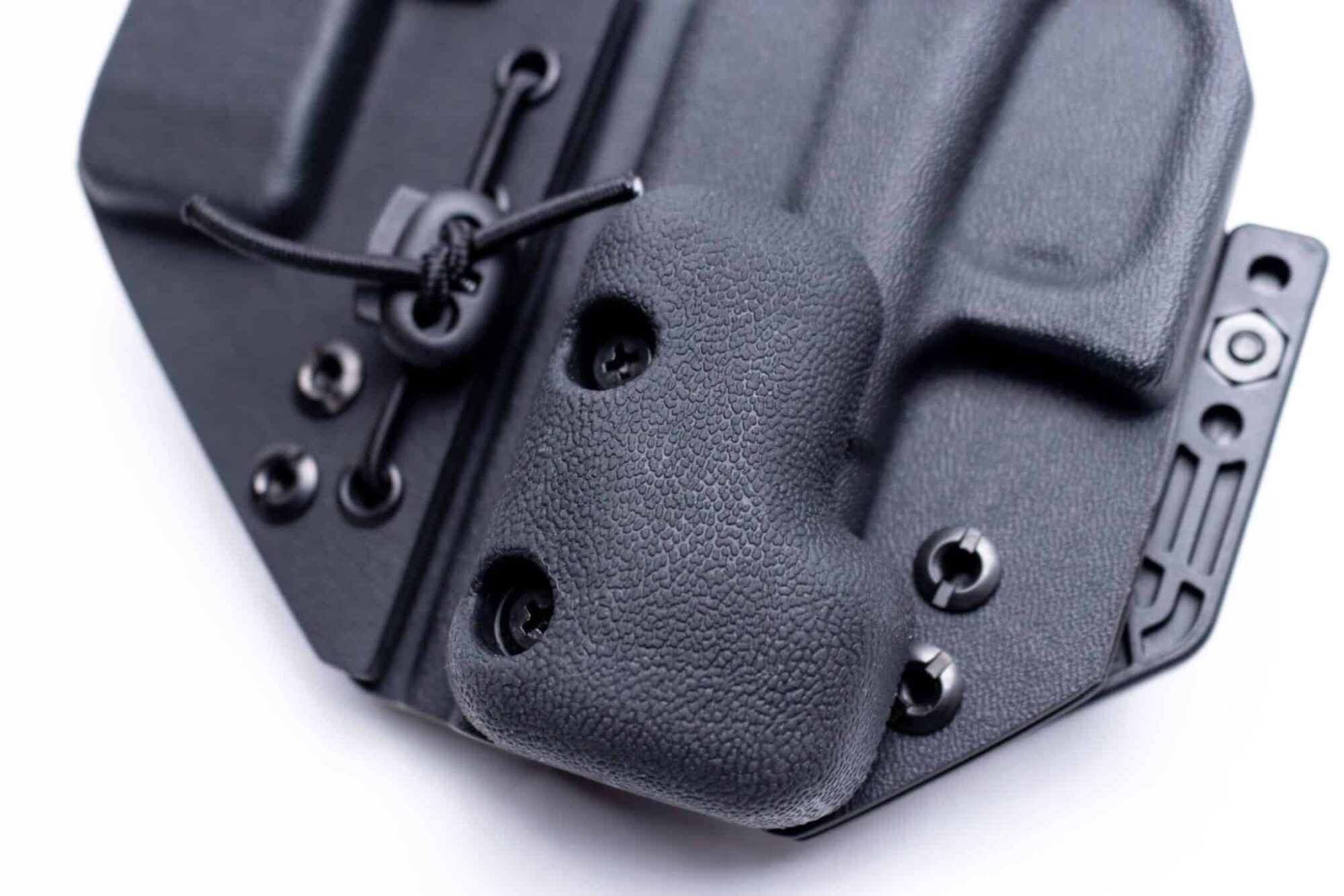
When it comes to appendix carry, comfort and concealment go hand-in-hand. One of the most overlooked components that can make a massive difference in your daily carry experience is the wedge. While many companies offer neoprene add-ons or foam blocks, a purpose-built wedge like the RCS injection-molded rubber wedge stands in a league of its own.
The Purpose of a Wedge in Appendix Carry
Appendix Inside-the-Waistband (AIWB) carry places the firearm at the front of your body, typically between your navel and hip. This position is fast to draw from and easy to conceal — but only when the holster is properly equipped. A wedge, placed on the inside face of the holster near the muzzle, pushes the bottom of the gun and holster away from the body. This leverage pulls the top of the gun into the body, improving concealment. While the wedge helps angle the holster, you also need the right combination of a wedge and a modwing to pull the grip in and achieve optimal concealment.
But it’s not just about how you hide it — it’s also about how it feels while you’re carrying it.
Why the RCS Injection-Molded Rubber Wedge Outperforms Neoprene
Neoprene wedges may seem appealing at first glance. They’re soft, squishy, and cheap to produce. However, that softness comes at a price: they break down quickly, absorb sweat, and often lose their shape. Over time, a neoprene wedge becomes a soggy, flattened pad that stops doing its job — or worse, creates hot spots and discomfort.
The RCS wedge is different.
Made from injection-molded rubber, the RCS wedge is engineered for durability and performance. It holds its shape no matter how much you wear it, how hot it gets, or how much pressure it absorbs throughout the day. Unlike neoprene, rubber doesn’t soak up sweat, which means it stays cleaner, dryer, and lasts longer.
Its molded shape isn’t just a block — it’s contoured to comfortably press against the body without creating unnecessary pressure points. The firmness gives it the structure needed to properly rotate the grip inward, maintaining the concealment profile and reducing the chance of the pistol tipping outward, which is a common issue in appendix carry without a wedge.
Comfort You Can Rely On
It may sound counterintuitive, but a firmer wedge often results in better comfort for long hours of wear. A consistent shape means consistent support — your holster won’t shift or sag. With a neoprene wedge, as it compresses throughout the day, it changes the angle of the holster, which can lead to printing and discomfort.
In contrast, the RCS wedge gives you a predictable, stable platform. Whether you’re sitting, standing, or moving, it maintains the same pressure and keeps the firearm tight to your body.
Final Thoughts
If you’re serious about appendix carry, a wedge isn’t optional — it’s essential. And if you’re going to run a wedge, the RCS injection-molded rubber wedge offers unmatched reliability, cleanliness, and consistent concealment.
Neoprene may work for the short term, but for long-term comfort and performance, rubber reigns supreme. Upgrade your setup — your waistline and your peace of mind will thank you.