
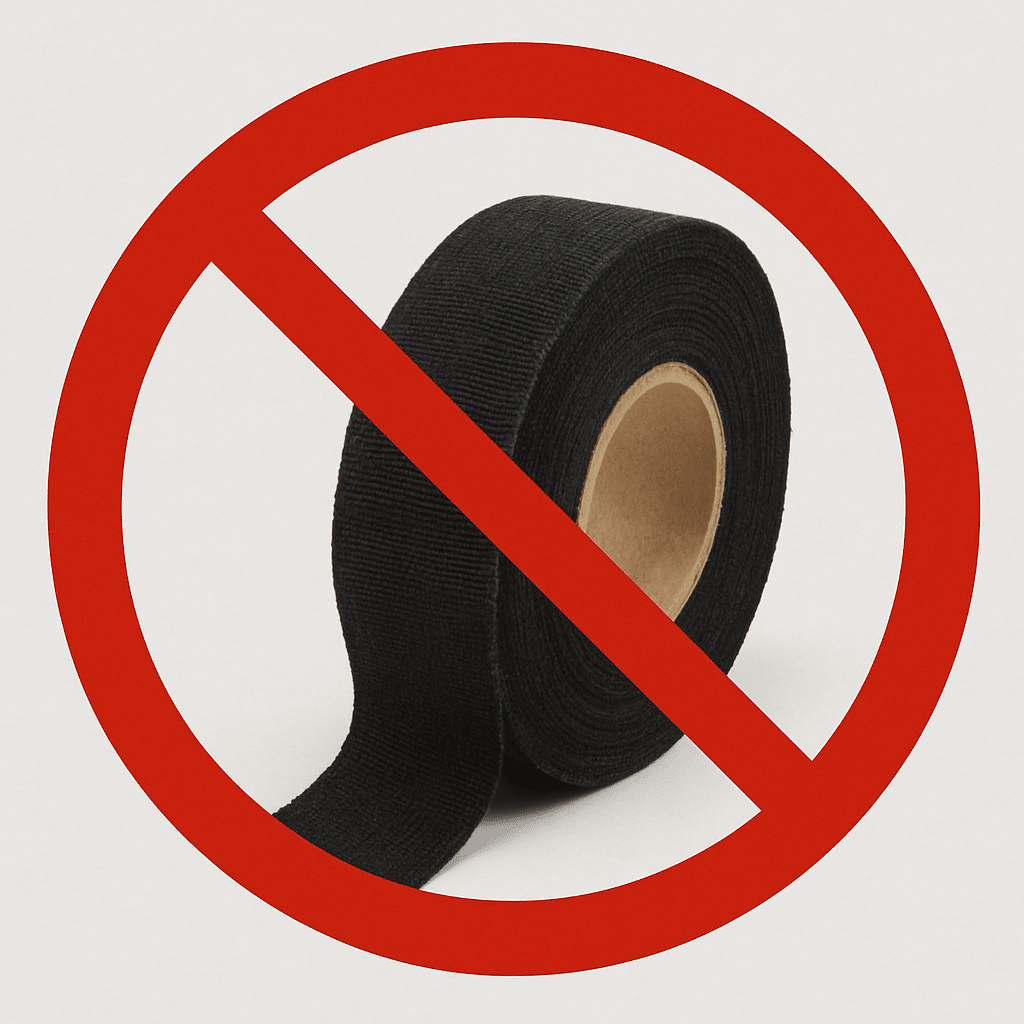
Applying hockey tape to the outer shell of a weapon light can significantly interfere with how a firearm seats and locks into our holsters.
Our holsters are designed to capture precise indexing points on the weapon and light, creating both audible and tactile feedback—the “click”—that signals full engagement and secure retention. When material such as tape is added to the light, it alters these dimensions. Even small changes can:
- Prevent the audible click: Tape disrupts how the light interfaces with the retention points inside our holster, often muting or eliminating the locking sound entirely.
- Reduce tactile confirmation: A properly molded holster provides a distinct feel when the weapon locks into place. Added thickness from tape can cause the holster to feel overly tight, inconsistent, or soft when holstering, removing the positive feedback that users rely on.
- Create excessive friction: Tape adds additional surface drag inside the holster, making it harder to fully insert the firearm. This can cause the gun to bind partway through holstering and require unnatural pressure to seat properly, affecting both speed and consistency.
Without proper audible and tactile confirmation, users may believe the firearm is secured when it is not, increasing the risk of accidental dislodging or failed draws under stress.
Recommendation
Weapon lights should be left in their factory condition when used with holsters molded to OEM specifications. If modifications such as tape are applied, a new holster must be molded specifically to the altered dimensions to maintain proper retention and function.